
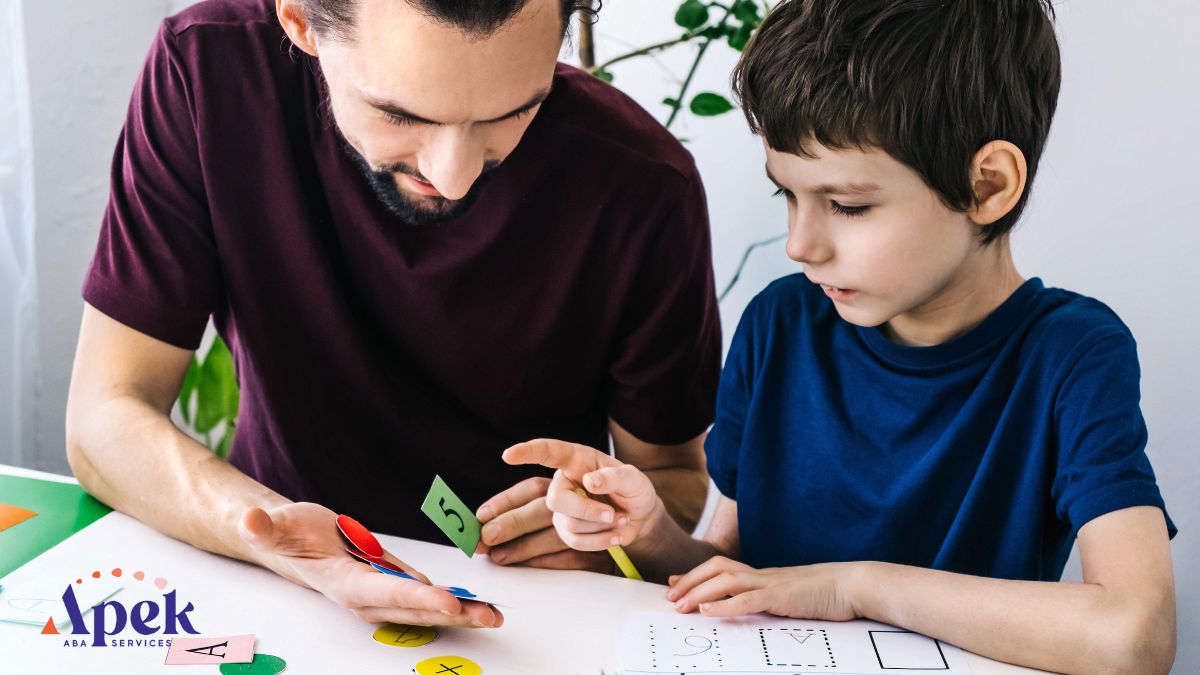
Key Points:
- Parents support ABA therapy at home by using daily routines like meals, play, and homework to practice skills.
- Clear goals, short practice sessions, and simple data sheets keep progress visible.
- Reinforcement, prompts, and visuals help children generalize skills, reduce stress, and build independence beyond therapy.
ABA therapy works best when it extends beyond structured sessions. Many children with autism spectrum disorder spend only a few hours per week with a therapist, but much more time with their families. Parents who carry over strategies into daily life help their child generalize skills, whether it’s communication, social interaction, or daily routines.
Supporting ABA therapy from home does not mean parents must become therapists. Instead, parents learn simple ways to integrate ABA principles into routines like mealtime, homework, or play. With the right guidance, small changes at home can bring long-term progress.
Start With Clear Roles, Goals, and a Simple Home Plan
Parents look for practical steps that fit busy days. ABA therapy from home works best when everyone knows the plan and why each step exists. A clear home plan turns ordinary routines into short teaching moments.
A strong start often covers three basics:
- The team defines one to three priority goals that match daily pain points.
- The team agrees on parent coaching time each week.
- The team sets up a simple data method that takes less than two minutes to complete.
When a plan stays small and visible on the fridge, follow-through improves and stress drops:
- Set one to three specific targets that remove friction at home, such as “request help with words or pictures” or “wait for one minute before snacks.”
- Choose a daily practice window of 10 to 20 minutes tied to a routine that already happens, such as breakfast prep or bath time.
- Use a one-page data sheet with boxes you can check for “success,” “prompt,” or “not yet,” and tally at the end of the day.
Autism prevalence now appears in many homes and classrooms, so families are not alone. Recent monitoring data show about 1 in 31 children are identified as autistic in the United States.

Build Everyday Learning: Reinforcement, Prompts, and Short Trials
Families support ABA therapy at home by using reinforcement and prompts in short, frequent practice. Reinforcement means the child receives something they value after the target behavior. Prompts help the child succeed and fade out over time.
Parents can run three to five short trials during natural routines. A trial can take 10 to 20 seconds.
- Use clear cues like “Show me the cup” or “Say help please,” then pause for two to three seconds before prompting.
- Deliver immediate reinforcement that the child cares about, such as a small bite, a turn with a toy, or social praise paired with access.
- Fade prompts from most support to least support, such as hand-over-hand, model, gesture, then natural cue.
Many families also ask about structure around sleep, since sleep affects behavior and learning. Sleep problems occur in 50% to 80% of autistic children, so bedtime routines often become a priority skill for home plans.
Create Routines That Generalize Skills Beyond Therapy
Generalization sits at the center of ABA therapy at home by parents. A child can request help in therapy, then forget to use the same skill at the sink or during homework.
A practical approach starts with mapping the day. Parents circle three routine hotspots where the same target skill would help. This builds fluency and reduces prompt dependence.
- Map three hotspots such as morning dressing, snack prep, and homework setup, and place the same communication target in each.
- Keep reinforcement portable so success moves with the child. A small reinforcer box with tokens or tiny items works well.
- Track generalization by marking which room and person the child used the skill with, not just whether the skill occurred.
Parent skill makes the difference. A recent meta-analysis found that parent-mediated play-based interventions improved social communication with an effect size of d = 0.63 and language with d = 0.40 for preschool autistic children. Parent skill-building helps gains carry over into daily life.
Set Up the Environment: Visuals, Choices, and Predictable Flow
Environment design shapes behavior before a demand even starts. ABA at home benefits from simple visual supports and predictable flow.
Parents can prepare a small set of visuals that match the current goals instead of printing a hundred icons. For many families, the starter kit includes a daily schedule, a first-then board, a token board, and three to five choice cards.
- Post a morning and evening checklist with three to five steps per routine. Check steps with the child to build independence and reduce prompting.
- Use a first-then board for non-preferred tasks, such as “first teeth, then book,” and deliver the “then” immediately at first.
- Offer two good choices to build cooperation, such as “brush in the bathroom or at the sink,” “blue cup or red cup,” and “pencil or marker for homework.”
Coach Communication First: Requests, Protests, and Waiting
Communication targets remove many daily pain points. Parents can teach requesting with words, signs, pictures, or a speech device. The response form matters less than the function. The child learns that communication changes outcomes. Parents prompt the request, honor it quickly, and then shape more complex language over time.
- Identify three powerful motivators and run 10 short request trials during snack or play. Prompt the request, then deliver access quickly.
- Teach one protest option for work times, such as handing over a “break” card, and pair it with a short timer for return to task.
- Practice waiting for five to ten seconds with a visual timer, then slowly extend the time by two to three seconds as success grows.
Home support teaches the same request during chores, play, and meals, so the child learns that communication works everywhere. That shift reduces frustration and opens room for new skills like commenting or answering simple questions.
Use Data Without Losing Your Evening
Data can feel heavy for families. The goal at home is a light system that guides decisions and shows progress without paperwork overload.
Families can track three types of data. Skill acquisition data shows how often a skill occurs with and without prompts. Generalization data shows whether a skill appears across rooms or people. Behavior data uses quick frequency or duration notes tied to a clear definition.
- Use daily tallies for new skills and mark “independent,” “prompted,” or “no response,” then circle the best five-trial streak.
- Add a simple G column for generalization and write the room or person code next to each success.
- Track one behavior metric at a time. If the target is “call out,” log frequency only for one hour each evening.
Handle Challenging Behavior With Prevention and Teaching
Challenging behavior often rises at home after long school days. Prevention beats reaction. Parents can arrange the environment, reduce unclear demands, and practice replacement skills outside crisis moments.
A strong plan covers proactive, teaching, and response steps. Response steps keep safety first, avoid power struggles, and reset after calm returns.
- Preview tough transitions with a two-minute warning and a visual timer, then offer a choice of the first step to start the next task.
- Teach a fast help or break request before work. Reinforce early and often, then slowly raise expectations as success grows.
- Respond to problem behavior with calm, brief, and consistent actions. Avoid long lectures. Return to the plan once the child is calm.
Make Coaching Work: Telehealth, In-Person, and Hybrid Options
Parent coaching can happen in person, by telehealth, or in a hybrid model. The choice depends on goals, home layout, and family schedule.
- Telehealth reduces travel time and lets therapists coach in the exact setting where challenges occur.
- In-person visits help with hands-on prompting or complex behavior plans.
- Hybrid models give families flexibility and keep coaching frequent.
Research supports parent-mediated approaches delivered through coaching. Studies show parents can reach high fidelity with practice and feedback, and children improve communication and engagement when coaching stays consistent.
- Use telehealth for quick reviews, video modeling, and live feedback during daily routines like meals or homework.
- Use in-person visits for teaching prompting mechanics, arranging the environment, or running more complex behavior procedures.
- Rotate focus each week, such as communication, independence, and flexibility, so coaching touches several key domains each month.
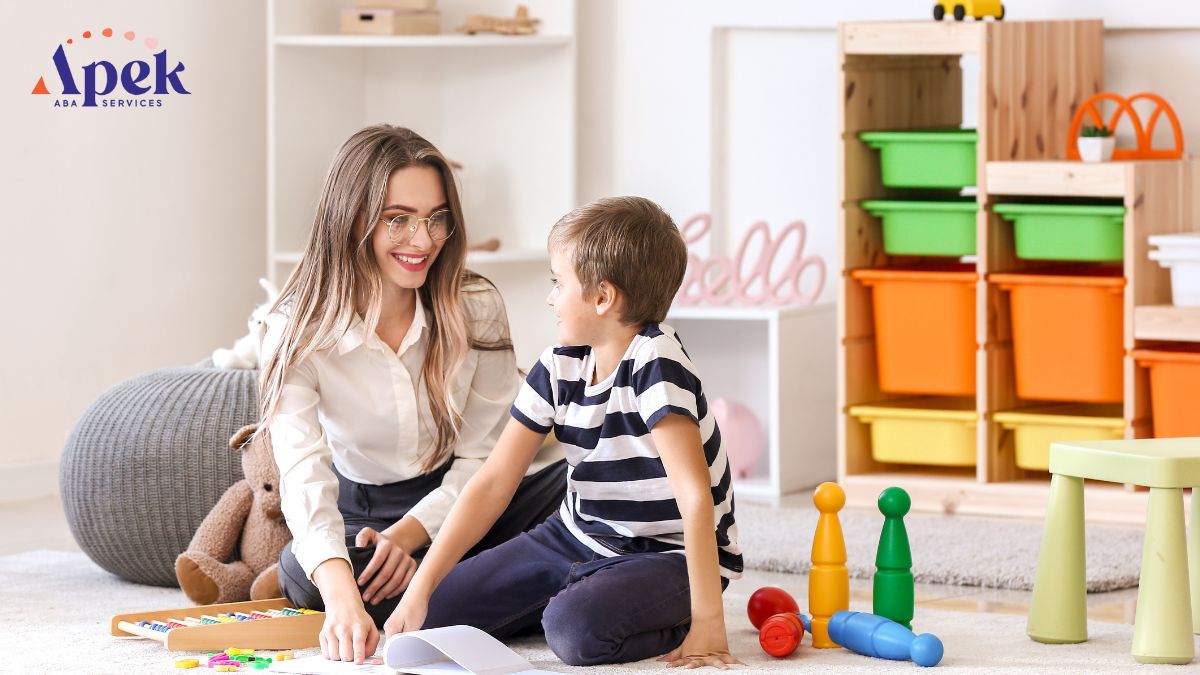
Put It Together: A Sample Week That Fits Real Life
Parents often ask what a week looks like when ABA therapy from home runs smoothly. The details change by family, but the structure stays steady. A rhythm builds across the week with short sessions, data checks, and simple environment tweaks. This rhythm keeps practice consistent without turning evenings into therapy marathons.
Here’s a sample plan you can follow:
- Monday: Coaching check-in, confirm goals, set the reinforcement menu, and place visuals in the kitchen and bathroom.
- Tuesday to Thursday: Run short trials during snack and play, tally data, and reinforce often. Add a two-minute movement break before homework.
- Friday to Sunday: Record a quick clip for feedback, try one generalization moment in the community, and complete a weekly reflection.
Over time, families swap in new goals, such as flexible play themes, cooperative chores, or longer waiting. The same structure holds. Clear cues, short trials, quick reinforcement, light data, and steady coaching build durable skills.
Frequently Asked Questions
Can I do ABA therapy at home myself?
Yes, you can use ABA strategies at home, but professional oversight is essential. Research shows parent-led ABA improves language, social, and adaptive skills when guided by trained specialists. A qualified BCBA designs programs and ensures safe, consistent methods, while telehealth coaching helps parents apply strategies correctly.
Is in-home ABA therapy effective?
Yes, in-home ABA therapy is effective when quality standards are met. Practicing skills in natural routines supports generalization across daily life. Evidence shows children improve language, behavior, and independence when parents and therapists use assessment-driven goals, data review, and consistent coaching in the home setting.
How much does ABA cost in-home?
In-home ABA therapy typically costs $120–$200 or more per hour before insurance. Annual totals can reach $62,000–$200,000 depending on intensity. Many states mandate insurance coverage for medically necessary ABA, and Medicaid rules vary, so families must review their plan benefits, deductibles, and authorization requirements.
Support ABA Therapy With Professional Guidance
Parents play an essential role in extending therapy beyond structured sessions. Children gain the most when families reinforce skills at home through routines, play, and communication. Still, guidance from professionals helps parents apply strategies correctly and adapt to changing needs.
Families seeking ABA therapy services in Georgia and Virginia can find structured programs that include both child-centered sessions and parent training. At Apek ABA, therapy focuses on empowering families to reinforce skills, manage behavior, and support daily independence.
Get in touch today to learn how expert ABA therapy can support your family’s goals and provide tools that last well beyond the therapy room.


